从功能基因组到分子育种:油菜遗传转化的研究价值与技术现状

【项目刊文】南京农业大学王一鸣团队揭示壳聚糖受体OsFID1-OsFID2介导广谱真菌抗性
2026 年 10 月 30 日
这是你所知道的烟草吗
2026 年 11 月 12 日
油菜(Brassica napus L.)是全球范围内重要的油料与经济作物,为人类提供食用植物油、饲用蛋白及工业原料。作为典型的异源四倍体作物,甘蓝型油菜经历了基因组三倍化事件,基因组中存在大量同源基因拷贝,这一特征既造就了其丰富的性状可塑性,也使得基因功能解析与分子育种工作更为复杂。
油菜遗传改良的核心研究方向
近年来,随着基因组测序与基因编辑技术的发展,油菜分子育种进入了精准化时代,研究方向主要集中在以下几个领域:
- 品质性状改良:通过靶向编辑FAE1、SGT等关键基因,实现低芥酸、低硫苷等品质性状的精准创制,培育优质油料品种;
- 抗病与抗逆性提升:针对菌核病、病毒病等主要病害,以及干旱、低温等非生物胁迫,通过基因工程手段创制抗性种质;
- 株型与产量调控:对CLV3、SPL、TFL1等关键调控基因进行编辑,优化花序结构、角果数量与开花期,实现产量潜力提升;
- 育种技术创新:如通过构建MiMe体系实现无融合生殖,固定杂交种的杂合优势,为多倍体作物育种提供全新路径。
遗传转化是研究落地的基础支撑
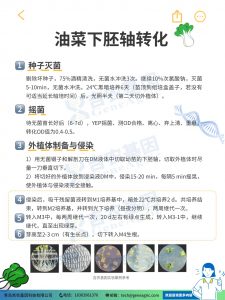
上述所有研究方向的推进,都建立在稳定、高效的遗传转化技术之上。目前油菜主流转化方法为农杆菌介导的下胚轴转化体系,但不同基因型间再生能力差异显著,尤其是冬性油菜品种普遍存在再生困难、转化周期长的问题,一定程度上限制了基因编辑等前沿技术在油菜育种中的规模化应用。
吉农基因遗传转化服务:
- 提供从载体构建到转基因/编辑植株交付的一站式服务
- 覆盖多种受体类型
- 阳性苗交付,结果稳定可靠
参考文献
[1] CRISPR/Cas9-Targeted Mutagenesis of BnaFAE1 Genes Confers Low-Erucic Acid in Brassica napus. Frontiers in Plant Science, 2022.
[2] Reduced glucosinolate content in oilseed rape (Brassica napus L.) by random mutagenesis of BnMYB28 and BnCYP79F1 genes. Scientific Reports, 2023.
[3] High Sclerotinia sclerotiorum resistance in rapeseed plant has been achieved by OsPGIP6. Frontiers in Plant Science, 2022.
[4] Sclerotinia Stem Rot Resistance in Rapeseed: Recent Progress and Future Prospects. Journal of Agricultural and Food Chemistry, 2021.
[5] Knock-out of TERMINAL FLOWER 1 genes altered flowering time and plant architecture in Brassica napus. BMC Genetics, 2020.
[6] 合成无融合生殖:从理论构想到杂种优势固定。华南农业大学学报,2026.